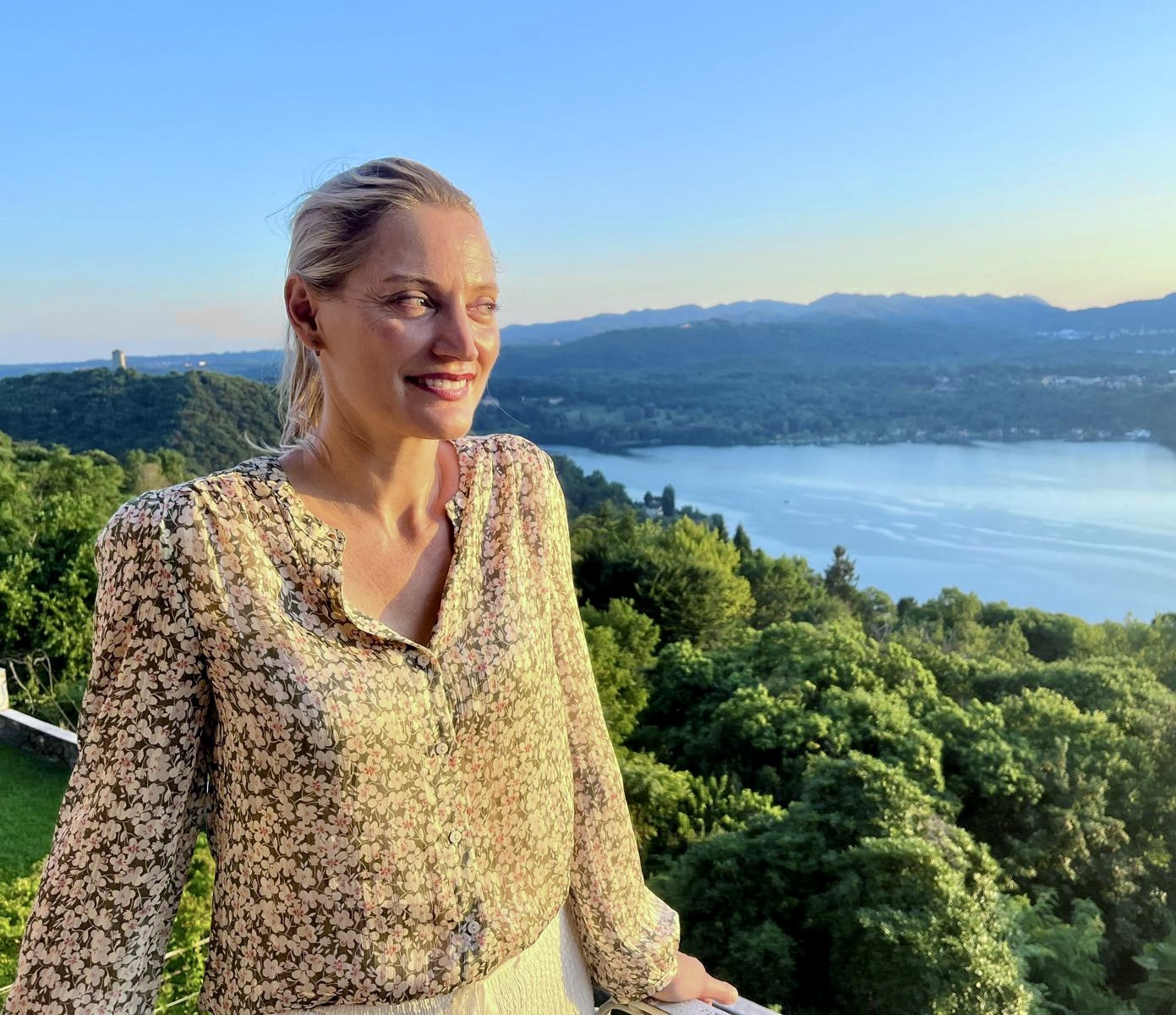
I have spent much of my life looking at the relationship between beauty and the person. Long before I became a personal stylist, I was drawn to the expressive power of colour, form, movement and the things we make with our hands. Yet my own way of dressing developed slowly, sometimes through apparent contradictions.
I loved simplicity, but I was also attracted to femininity and adornment. I valued modesty and freedom, yet delighted in clothes that could express something personal. What eventually brought these impulses together was not a new wardrobe, but a more attentive understanding of beauty - and of what it means to dress as a whole person, in relation to others.
This is the story of that gradual discovery.
01 / The roots of simplicity
I grew up in the French countryside, surrounded by animals, nature and a family culture in which work, sincerity and freedom mattered more than appearances. My mother favoured practical clothes, often handed down, and wanted us to feel unencumbered by vanity or the pressure to attract attention. I am grateful for that education. It taught me that our worth cannot be measured by the way we look.
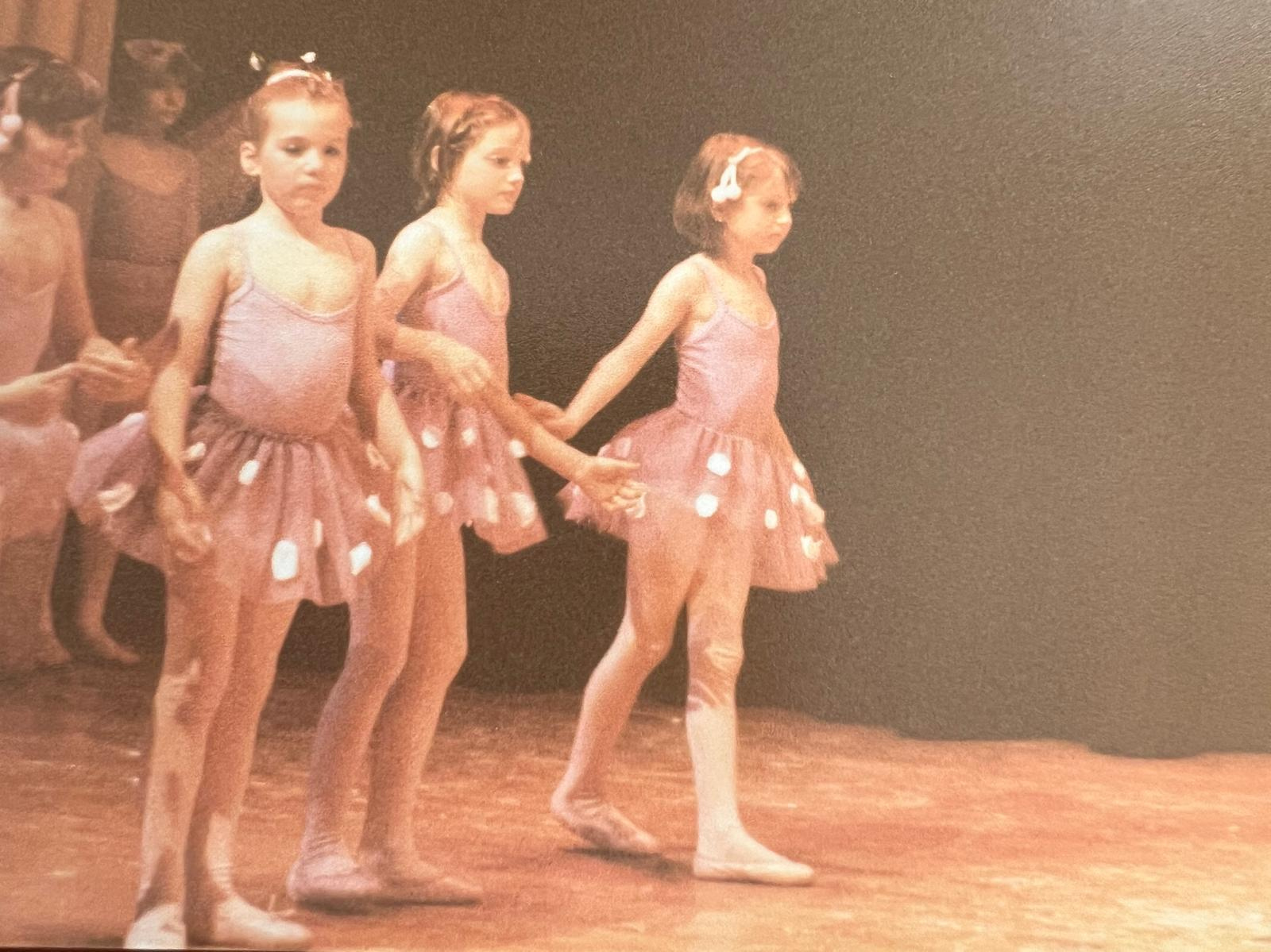
Yet another part of me was fascinated by beauty. I drew, made things with my hands and imagined outfits for dolls. For a time, until I was about fifteen, I even dreamed of becoming a stylist. Classical ballet, which I studied from the age of four into my teenage years, opened a different world: one of music, discipline, grace and movement. I admired the strength and refinement of my teachers, and began to see how posture, proportion and gesture could communicate beauty without a word.
My grandmother offered another example of femininity and elegance. Between her and my mother, I inherited two valuable but seemingly contrasting lessons. One was about naturalness and freedom; the other about the care we can bring to our appearance. It would take me years to understand that they did not need to be in conflict. I could be simple without neglecting beauty, feminine without seeking attention, and elegant without abandoning naturalness.
02 / A practical young woman
As a young woman, comfort, practicality and an unpretentious way of dressing still came naturally to me. I was busy learning and living; clothes were seldom at the centre of my attention. My academic interests lay elsewhere - in the understanding of people, ideas, nations and cultures. I studied International Relations at Sciences Po and later Diplomacy at the University of Turin, where anthropology, history, political thought and international communication helped shape my curiosity about human identity.
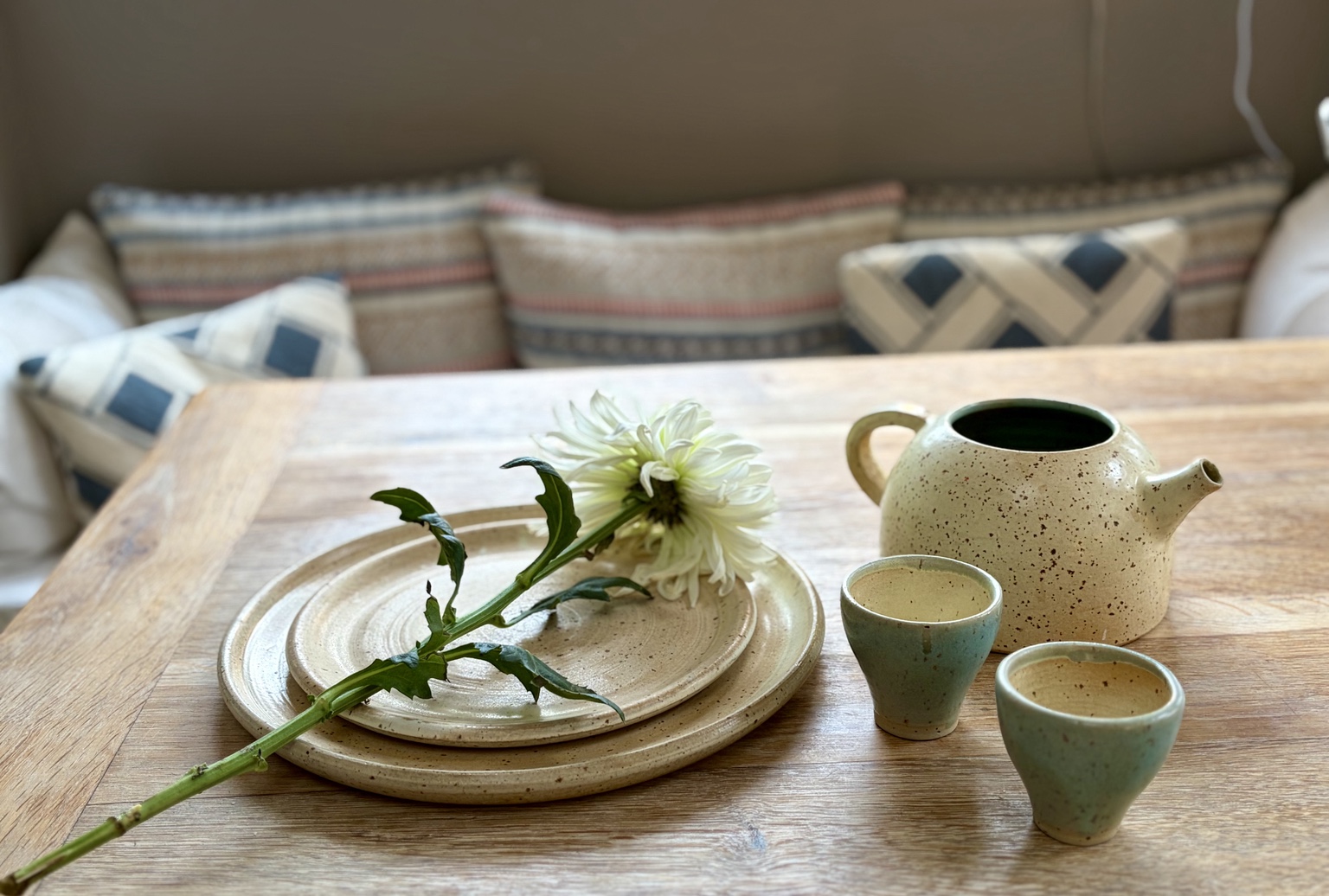
I married young, at twenty-one, and the years that followed were filled with family life and international moves. I translated theological books from French into Italian, and I devoted a considerable part of my professional life to sculpture and ceramics. Working with clay over many years taught me to pay attention to shape, proportion, texture and purpose. A beautiful object must be faithful to its material; a vessel must also work well in the hands of the person who uses it.
I did not yet connect these interests consciously with personal styling. Looking back, however, I recognise a common thread: I have always been interested in the relationship between outward form and inner meaning, and in the dignity of what is useful as well as beautiful.
03 / An awakening to beauty
Living in Mexico brought an unexpected turning point. I encountered women whose elegance and femininity coexisted naturally with their faith, convictions, family responsibilities and service to others. They helped me question an assumption I had carried for a long time: that simplicity and modesty were somehow opposed to taking pleasure in beauty or presenting oneself with care.
Their example was not one of display. It was the quiet coherence between who they were, how they lived and how they presented themselves. I began to see femininity, modesty and elegance not as competing ideals, but as qualities that could enrich one another. The childhood thought of working with personal style returned - this time with a more mature understanding of what such work might mean.
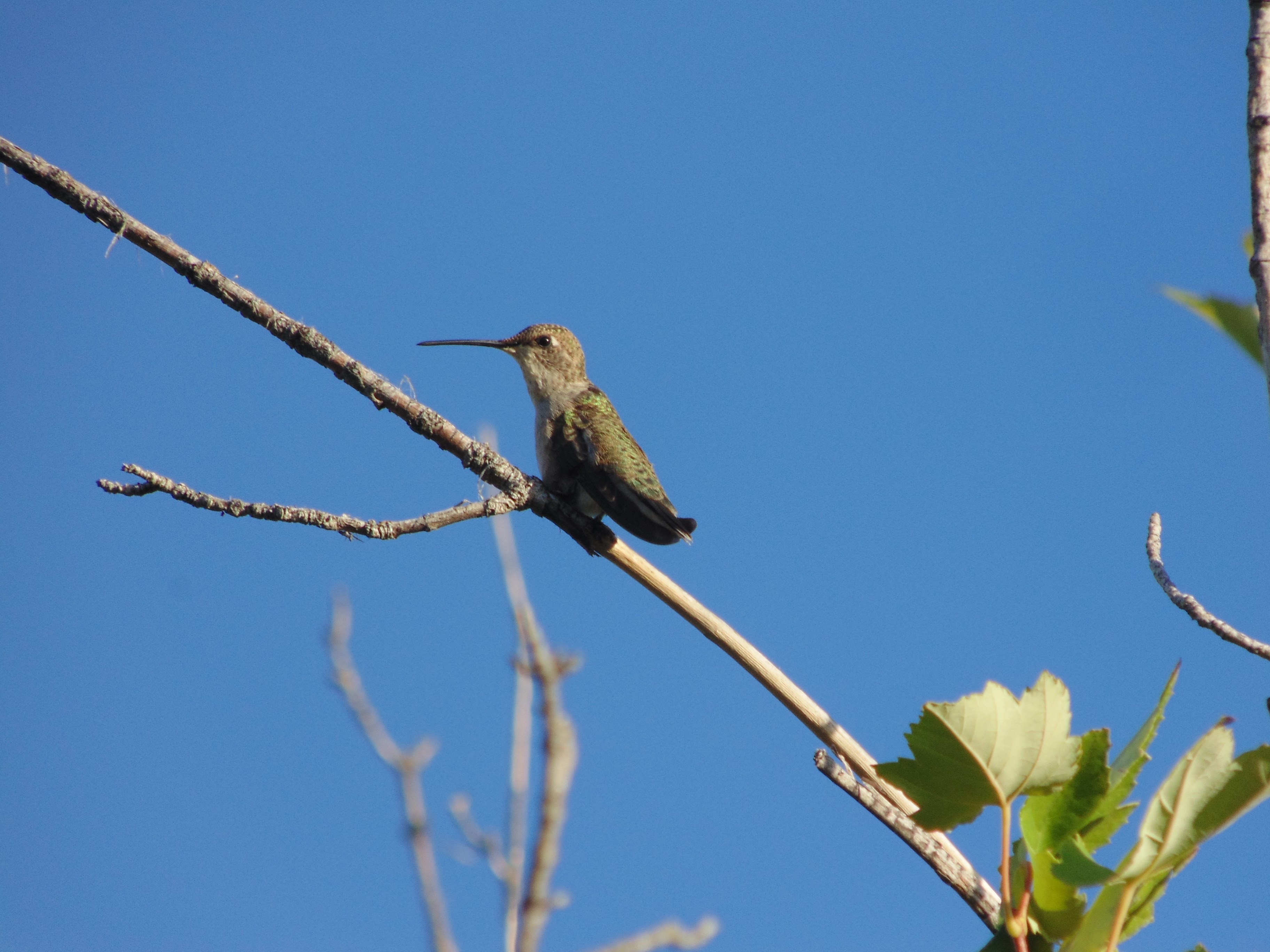
Our garden in Mexico was also visited by hummingbirds. Their extraordinary precision, energy, lightness and grace enchanted me. Years later, I chose the hummingbird for my monogram because it still evokes this moment of rediscovery: beauty that is alive, expressive and yet never heavy.
04 / Experimentation and discovery
After that awakening, I began to explore the expressive possibilities of clothes more consciously. My wardrobe was still essentially practical, but I found pleasure in handmade jewellery, colourful scarves, more romantic details and vivid combinations. In photographs from those years, I see a denim jacket enlivened by a blue, turquoise, lilac and peach scarf and generous earrings; in another, a pink cardigan and a multicoloured necklace. These choices expressed genuine joy and creativity.
Not everything worked equally well on me. At the time, I was often drawn to warm, highly saturated shades, without realising that their brightness could overpower my features. I also tended to add several interesting elements to an outfit, even when one might have been enough. These were not mistakes to regret. They were part of learning what I loved, before learning how to refine it.
05 / Knowledge brings clarity
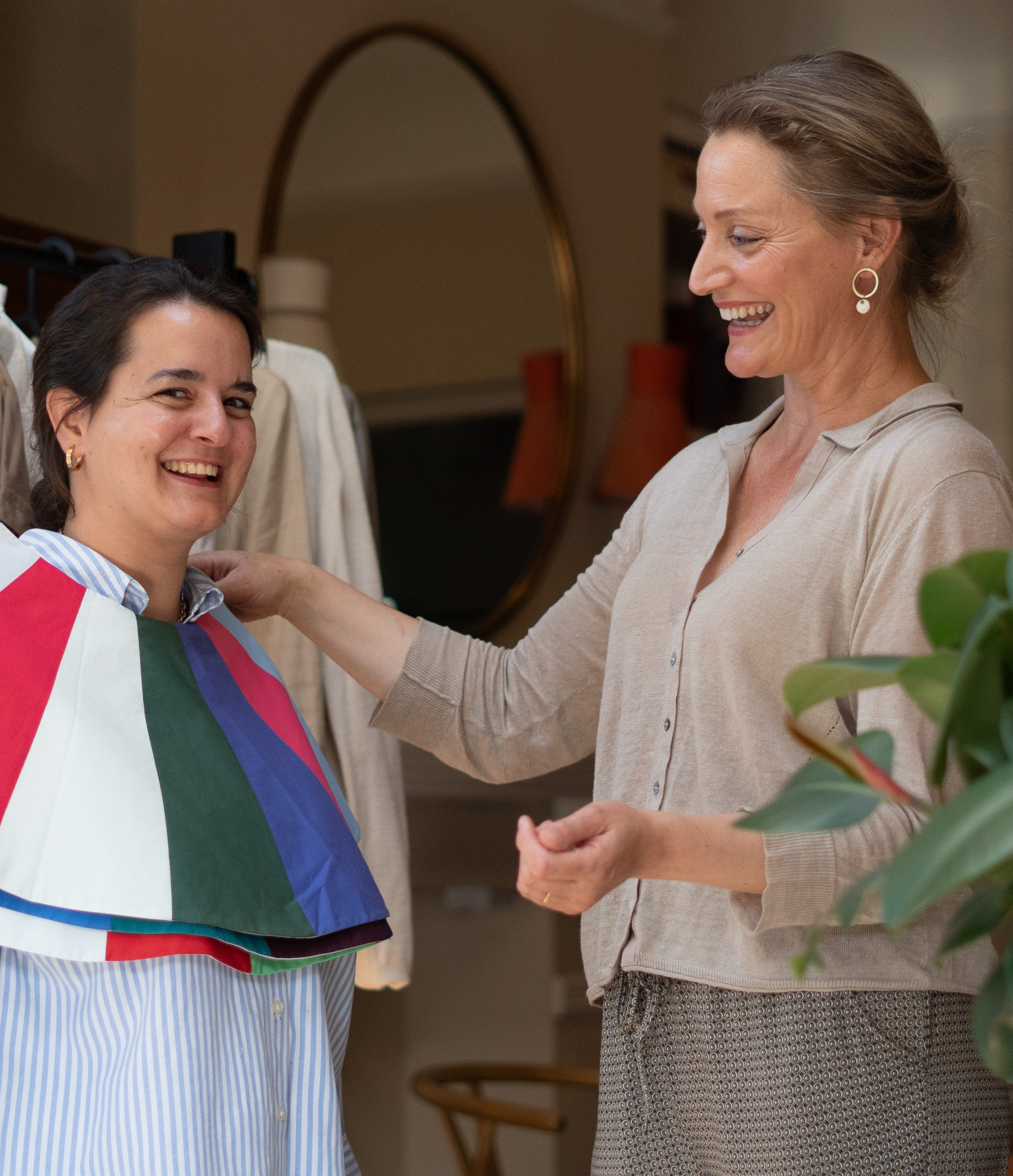
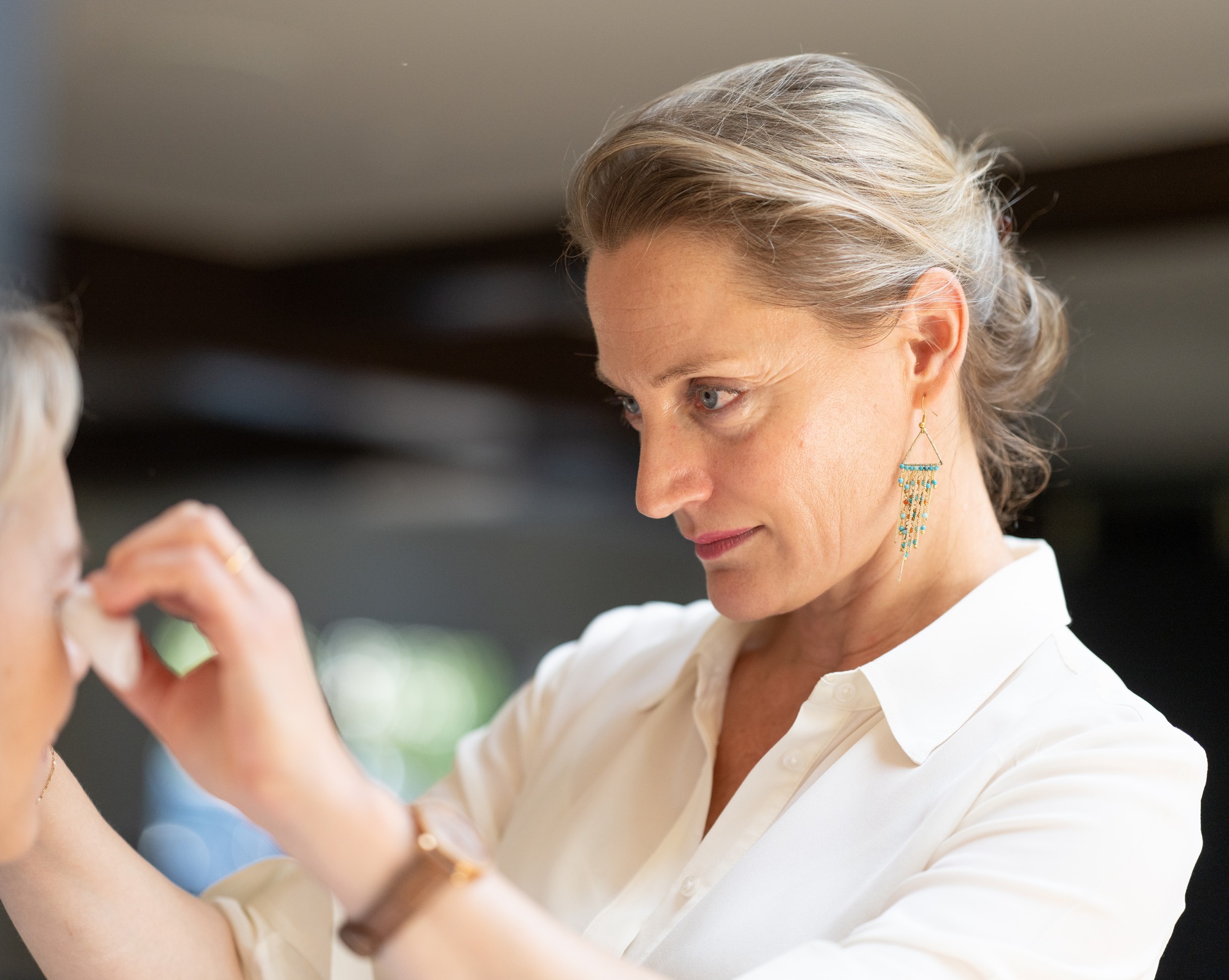
After settling in London, I finally trained in personal colour and style analysis to become a personal stylist. Colour draping showed me how dramatically - but also subtly - different fabrics can alter the appearance of a face. The study of body proportions, line, scale, fabric and garment construction provided a language for observations I had previously made by instinct. I discovered the value of understanding not only what works, but why.
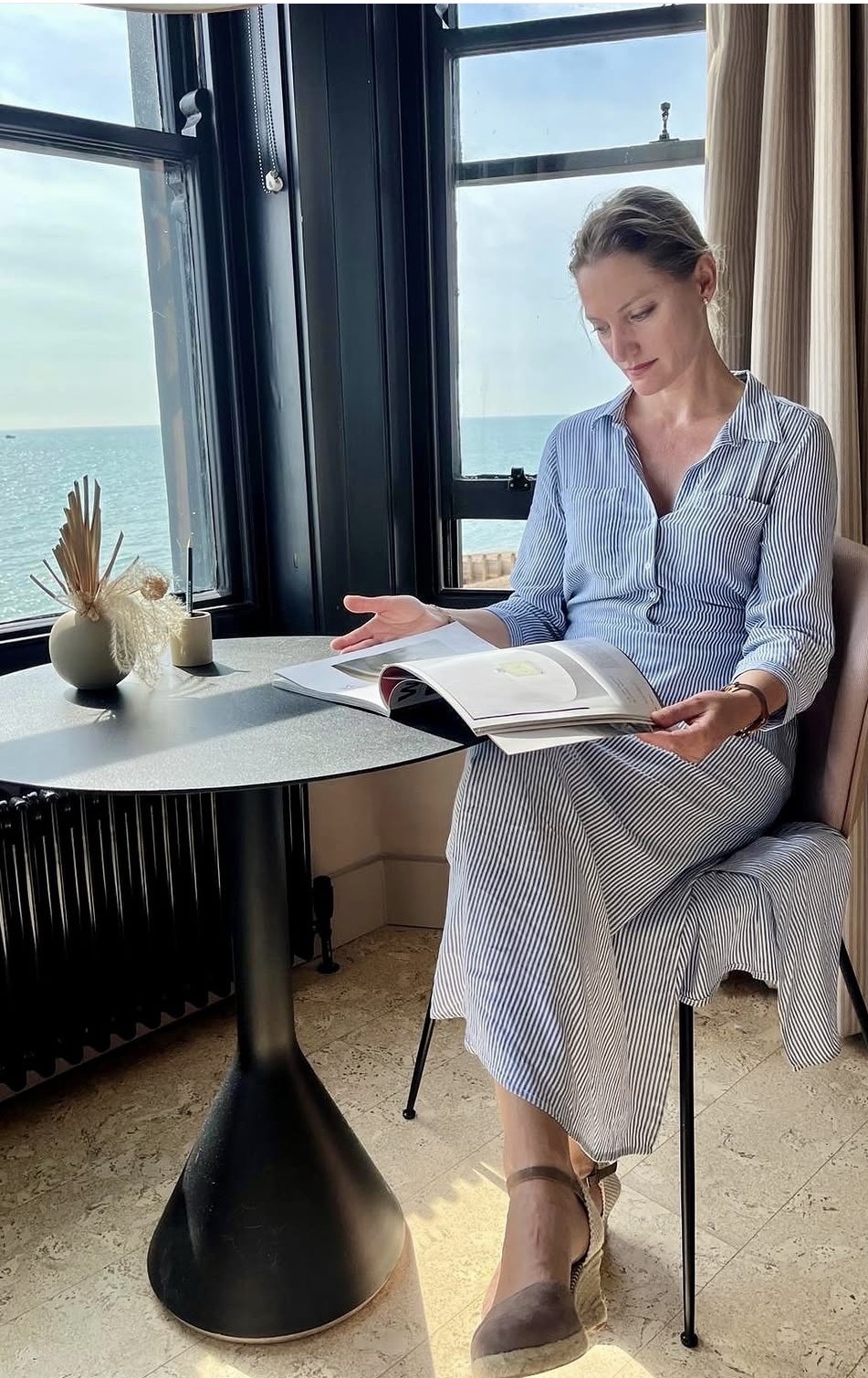
My own colouring was analysed as Soft, Cool and Deep, in that order: softness is the dominant quality, followed by a neutral-cool temperature and a degree of depth. Softness concerns the intensity of a colour, not necessarily its lightness. I generally look better in muted medium-to-deep tones, with moderate contrast, than in very pale colours or extremely bright ones. Strongly saturated shades tend to overwhelm me; warm shades can make my skin appear yellow. Discovering this helped explain why some of the exuberant colours I had loved did not always love me back.
The knowledge was liberating, but it did not change my style overnight. The most significant refinement came gradually, especially in the years from 2023 to 2026, as professional experience met deeper self-awareness. Colour and proportion gave me the tools; life experience, reflection and a clearer sense of my identity helped me decide which possibilities felt genuinely mine. Technical advice is essential, but it is not the whole story of personal style.
One Italian photograph captures that transition for me: a pewter-and-white striped dress worn with a scarf. I still appreciate the dress. Today I would probably remove the scarf and perhaps wear a pair of substantial earrings instead. The change is small, but revealing. I have not rejected colour or character; I have learned that sometimes a more restrained choice allows both the garment and the person to speak more clearly.
06 / A style that serves the person
Today I describe my style as Natural Feminine Chic. It remains rooted in comfort, simplicity and a love of natural materials, but I now welcome femininity with a more refined simplicity. I favour soft white, stone and taupe alongside deeper neutrals such as charcoal blue and chocolate. Sky blue, jade or a discreet soft red can bring movement and life. I enjoy a beautiful detail, but no longer feel the need to add several. My wardrobe is calmer, more coherent and more suited to the life I actually lead.
This evolution has also changed how I understand my work. We are not simply collections of physical features waiting to be enhanced. Each person brings a history, a character, responsibilities, relationships and hopes. A flattering colour or beautifully cut jacket can be a pleasure, even a source of confidence, but clothes cannot create our dignity. They can, however, help us express something of who we are and the care we wish to show the people around us.
I return often to the memory of my grandmother towards the end of her life. She was in hospice, confined to bed and in pain. Yet when we came to visit, she made an enormous effort to comb her beautiful, wavy silver hair, reach for her red lipstick and smile at us. The gesture did not make her worthy; she already possessed an inalienable dignity. What moved me was the love and gratitude it communicated. She wanted to welcome us, to mark our visits as precious and to honour the life we still shared.
That memory continues to guide me. Personal style need not make us the centre of attention. At its best, it can become a modest and visible expression of love - a way of revealing Beauty to others.
A closing reflection
I believe personal style flourishes when it begins with truth: a clear and kindly recognition of our nature, our features, personality, history and circumstances. It grows through goodness: the thoughtful use of our resources and the consideration we show others. And it finds harmony in beauty: not perfection or display, but the fitting relationship between the person, her appearance and the life she leads.
My own journey has taught me that discovering a style is not the same as inventing a new self. It is a process of learning, choosing and refining - an invitation to become more at ease with what is already ours, and more generous with what we bring to the world.
Beauty is not simply an end in itself. It can also open our eyes to what is true and draw our hearts towards what is good.

CONTINUE YOUR DISCOVERY
The PhilosophyJourneys & ServicesBegin with a conversationReturn to the Journal